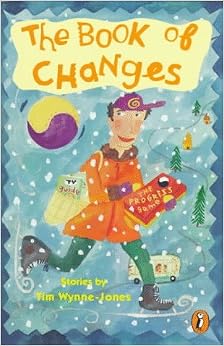
Free Download The Book of Changes, by Tim Wynne-Jones

As related to this referred publication, you may have understood why this book is waited for. However, for you that are still interested of the factors, you will understand he reasons when you begin to read the book. Looking at the cover of The Book Of Changes, By Tim Wynne-Jones and review title will lead you know why many people falling in love. Keen on guide that related to the topic you are searching for can make you feel satisfied. This is exactly what will certainly make you fill that need.

The Book of Changes, by Tim Wynne-Jones

The Book of Changes, by Tim Wynne-Jones


The Book of Changes, by Tim Wynne-Jones


Free Download The Book of Changes, by Tim Wynne-Jones

Will reading habit influence your life? Several say yes. Checking out is a great habit; you can establish this habit to be such intriguing way. Yeah, checking out behavior will certainly not only make you have any kind of favorite activity. It will be one of advice of your life. When reading has become a habit, you will deficient as disturbing tasks or as boring activity. You could get several benefits and also importances of analysis.

Many people checking out a book as they require it at the time, exactly they need some components of web page to provide the ideas. And even, just few page from the book that constantly provide reference for your jobs or jobs. This is why lots of readers are the autodidact readers. Possibly, a few of the viewers of The Book Of Changes, By Tim Wynne-Jones are additionally too. Nevertheless, it does not suggest that there is none that love analysis publication due to the fact that it is their practice. There are also a few of individuals that constantly do completing reading the book as their need. As their routine as well as society, reading will direct them well.

Book, will certainly not always belongs to exactly what you have to obtain. Bok could additionally remain in some various genres. Religions, Sciences, socials, sports, national politics, regulation, and also numerous book styles come to be the sources that in some cases you need to review all. Nonetheless, when you have had the analysis routine and also learn more publications as The Book Of Changes, By Tim Wynne-Jones, you can feel much better. Why? Because, your chance to review is not only for the requirement in that time yet additionally for continuous activities to constantly boost and improve your brighter future and also life high quality.

Generating the skills and experiences of somebody will feature how you have obtained the benefits and also qualities of The Book Of Changes, By Tim Wynne-Jones You might not feel baffled ways to get it. This is the soft data system of book that you could get as your option. In this condition, you need to support yourself to be somebody better. It can be done by reviewing it slowly yet undoubtedly. Conserving the soft documents in gadget as well as laptop computer tool will certainly permit you open it everywhere.

The Book of Changes, by Tim Wynne-Jones

Product details

Grade Level: 4 - 6

Lexile Measure: 670L (What's this?)

amznJQ.available('jQuery', function() {

amznJQ.available('popover', function() {

jQuery("#lexileWhatsThis_db").amazonPopoverTrigger({

showOnHover: true,

showCloseButton: false,

title: 'What is a Lexile measure?',

width: 480,

literalContent: 'A Lexile® measure represents either an individual's reading ability (a Lexile reader measure) or the complexity of a text (a Lexile text measure). Lexile measures range from below 200L for early readers and text to above 1600L for advanced readers and materials. When used together Lexile measure help a reader find books at an appropriate level of challenge, and determine how well that reader will likely comprehend a text. When a Lexile text measure matches a Lexile reader measure, this is called a "targeted" reading experience. The reader will likely encounter some level of difficulty with the text, but not enough to get frustrated. This is the best way to grow as a reader - with text that's not too hard but not too easy.',

openEventInclude: "CLICK_TRIGGER"

});

});

});

Paperback: 160 pages

Publisher: Puffin (August 1, 1997)

Language: English

ISBN-10: 0140380728

ISBN-13: 978-0140380729

Product Dimensions:

20 x 20 x 20 inches

Shipping Weight: 1.6 ounces

Average Customer Review:

3.0 out of 5 stars

1 customer review

Amazon Best Sellers Rank:

#2,064,997 in Books (See Top 100 in Books)

I decided to read this book after I read Stephen Fair. Although The Book of Changes has many good stories, the stories weren't as well written as Stephen Fair.This collection is pretty good though becuase it covers a wide area of subjects, and there is something for everyone. Some stories are better than others as is the case of every short story collection, but the better stories in The Book of Changes are a bit hard to grasp.If you've never read Tim Wynne-Jones before, you should start with The Maestro or Stephen Fair. This short story collection would be more suitable for kids than young adults.

The Book of Changes, by Tim Wynne-Jones PDF
The Book of Changes, by Tim Wynne-Jones EPub
The Book of Changes, by Tim Wynne-Jones Doc
The Book of Changes, by Tim Wynne-Jones iBooks
The Book of Changes, by Tim Wynne-Jones rtf
The Book of Changes, by Tim Wynne-Jones Mobipocket
The Book of Changes, by Tim Wynne-Jones Kindle

The Book of Changes, by Tim Wynne-Jones PDF

The Book of Changes, by Tim Wynne-Jones PDF

The Book of Changes, by Tim Wynne-Jones PDF

Get Free Ebook The Raven Tower, by Ann Leckie

What about the means to obtain this book? So simple! The Raven Tower, By Ann Leckie is given for soft documents of guide. So, you can take it quickly by downloading and install guide. Where? Check out the web link that we provide and just click it. When clicking you can find guide and also interest in it. Currently, your selection to select this publication to be yours is so basic.

The Raven Tower, by Ann Leckie

The Raven Tower, by Ann Leckie


The Raven Tower, by Ann Leckie


Get Free Ebook The Raven Tower, by Ann Leckie

The Raven Tower, By Ann Leckie When creating can change your life, when writing can enrich you by providing much cash, why do not you try it? Are you still very baffled of where understanding? Do you still have no concept with exactly what you are going to write? Currently, you will require reading The Raven Tower, By Ann Leckie An excellent author is a good visitor simultaneously. You could define exactly how you write relying on exactly what publications to review. This The Raven Tower, By Ann Leckie could aid you to resolve the trouble. It can be among the best sources to develop your composing ability.

To make you little bit fall in love to review, we will offer the soft documents of The Raven Tower, By Ann Leckie to check out. Previously, you should get it by making handle the link of guide. This book is type of favorite book checked out by many people, from around the world. When you wish to do such experiences, yet you still don't have enough cash, read a publication and also you can feel like being in your real adventure.

The Raven Tower, By Ann Leckie that we suggest in this website has lot with the discussion of making better person. In this location, you could see exactly how the presence of this book really crucial. You could take much better book to accompany you. When you require guide, you can take it conveniently. This publication will certainly reveal you a new experience to know even more regarding the future. Also guide is very great; you will not feel challenging to value the material

After getting the soft documents, you can conveniently create brand-new ideas in your mind. It is difficult to get guide in your city, probably moreover by going to the store. Seeing the store will not additionally provide assurance to obtain the book? So, why do not you take The Raven Tower, By Ann Leckie in this site? Also that's only the soft data; you can truly feel that guide will certainly be so helpful for you as well as life around.

The Raven Tower, by Ann Leckie

Review

"A powerhouse epic of humans and gods at war, deeply imagined and profoundly thrilling. There are echoes of Shakespeare and Le Guin in The Raven Tower, but its strange dark brilliance could only have come from Ann Leckie."―Lev Grossman"I've been reading fantasy my whole life. After all these years, it's a delight to read something so different, so wonderful and strange."―Patrick Rothfuss"Leckie's tale takes on a mythic, metafictional quality...and the story's elements weave into a stunning conclusion. This impressive piece of craftsmanship cements Leckie's place as a powerful voice in both SF and fantasy."― Publishers Weekly (starred review)"Sharp, many layered, and, as always for Leckie, deeply intelligent."― Kirkus (starred review)"Leckie has created an enthralling and well-realized fantasy world, full of not only magic and gods but also characters representing a broad spectrum of gender and sexuality. Highly recommended for...anyone looking for exciting and boundary-pushing fantasy."― Booklist (starred review)"The Raven Tower is a unique, intricate fantasy set in a fascinating world of gods who are at once formidable and vulnerable. Original and powerful -- I loved it. Highly recommended for fans of N. K. Jemisin or Guy Gavriel Kay."―Django Wexler"A gripping story that's one part mystery, one part a new history of the world, The Raven Tower is an incredible fantasy, told by one of the most unique voices I've had the privilege of reading."―S. A. Chakraborty"Earthsea's elegance meets Sanderson's clever magic in this talon-sharp saga of divinity and revenge. Ann Leckie is unstoppable."―Seth Dickinson

Read more

About the Author

Ann Leckie is the author of the Hugo, Nebula, Arthur C. Clarke, and British Science Fiction Award-winning novel Ancillary Justice, and its Locus Award-winning sequel Ancillary Sword. She has also published short stories in Subterranean Magazine, Strange Horizons, and Realms of Fantasy. Her story "Hesperia and Glory" was reprinted in Science Fiction: The Best of the Year, 2007 Edition edited by Rich Horton.Ann has worked as a waitress, a receptionist, a rodman on a land-surveying crew, and a recording engineer. She lives in St. Louis, Missouri.

Read more

Product details

Hardcover: 432 pages

Publisher: Orbit (February 26, 2019)

Language: English

ISBN-10: 0316388696

ISBN-13: 978-0316388696

Product Dimensions:

6.5 x 1.5 x 9.5 inches

Shipping Weight: 1.4 pounds (View shipping rates and policies)

Average Customer Review:

4.4 out of 5 stars

50 customer reviews

Amazon Best Sellers Rank:

#11,912 in Books (See Top 100 in Books)

Ann Leckie's first novel, Ancillary Justice, was only released in 2013 but came out with the poise and polish of a seasoned author's work. None of the three other Ancillary universe books that followed has done anything to lesson that aura. All of her work required a shift of gears to read, she seems to delight in upsetting or at least ignoring convention in her world building but a good plot will only take you so far without giving the reader someone likable to hang the story on and in this Ms. Leckie also excels. Gentle lead characters that were quite capable of dealing violence capably if pushed captured my attention. The Raven Tower doesn't abandon any of these precepts but does so in a new genre for her, leaving scifi for fantasy with her sword and sorcery doing a refreshing take on what would be pablum in lessor hands. The book is narrated from the viewpoint of a watching nonhuman consciousness that alternates chapters between said consciousness's unveiling of its history and its present observation of a human newcomer of indeterminate sex (in her other work few of Leckie's lead characters are gender obvious) who arrives at the stone fortress the consciousness inhabits as the book opens. The initial chapters of the narrator's history started slowly but at some point about a third of the way in I realized I was hooked on the very strange tale that was unfolding. The passages dealing with the newcomer were more accessible at first but gradually both tales became equally appealing. Its hard to go into detail without spoilers so while I don't feel The Raven Tower has the easy appeal and breadth of characterization of her four Ancillary universe entries it still clears the bar as a rewarding read. I will be honest here and say that this book was so unusual and challenged enough of my concepts of god(s) and their relationship to humans that I will have to let it settle while it digests. I will have to let some time pass in order to come to grips with the feelings that arose but things like that don't become clear overnight.Note/spoiler warning to followers of mainstream deities, may be challenging to personal belief systems: I was wrong, I got a good night's sleep and things did become more clear-never underestimate the human animal. Painters make use of a plain background in order to focus attention on their desired subject. in comparison to previous work Leckie's lack of passion and depth of characterization for her characters and their situation may be to allow her main point to emerge, which seems to be humanity's relationship to god. In the past when church and state was combined in one powerful and all to frequently repressive authority she would have been toasted at the stake in many cultures for the unrepentant heresy she presents in The Raven Tower. Back in the 1950's and '60's when it was common to use the capitol G in spelling the almighty's name I have no doubt she would have faced varying amounts of social ostracism, but now the most common reaction (I hope) could well be, "Big deal, what's new."When I speak of the views the book presents by gods I am referring to any consciousness connected to a physical body/object or not that can manifest control or power over aspects of the physical world beyond the abilities normal humans have. In other words small g gods. Neither I nor the book is referring to what might be considered a universal mind/group consciousness that pervades all of reality and non reality. That is another kettle of fish entirely. If you prefer this could be termed a capitol G God, but if I read this book correctly our religions have been infiltrated and are infused and controlled by small g gods masquerading as capitol G Gods. Could be the reason the whole god thing has fallen out of favor, among large elements of the population, huh? In mitigation Ms. Leckie does point out that the little gods can on occasion be caring and supportive in their relations with us humans or selfish, petty, controlling, and blood thirsty as well, but consistently all caring and benign, not so much. A religious treatise on this subject would attract only modest interest, but wrap it in an appealing fantasy novel and us masses might get to thinking. Set no false gods before me, huh? I have spent a large portion of my life either looking for, denying or running away from god/God. Maybe it's time to get over it and be myself.P.S.Apologies for any mashed toes, I would be disappointed if everybody agreed with me, not trying to start a religion here or an argument.

I've been reading too much underground literature lately--mostly badly translated Russian and Chinese stuff. So I took a break when Ann Leckie's latest novel came out to read it.Leckie made her name with her science fiction novel Ancillary Justice (which I strongly recommend). She won the Hugo, Nebula, and Arthur C. Clarke awards. She followed it up with two more in the trilogy, and each was very well written, enjoyable, fun, and fresh.But this new novel was fantasy--different for her. And it is different for me as well. It's hard to describe. Words that come to mind are: subtle, subversive, experimental, and creative. I love the protagonist. I love the story. I love the way it unfolds. I love the world building. I love the way the book makes you think. And perhaps most of all, perhaps due to the crap I have been reading lately, I love the language and the flow and the poetry of the words and narration.9/10! Get this book!

An original fantasy story! There is not a naive unassuming youth who realizes his destiny as "the one", and battles the villains' monstrous hordes. Instead fallible human beings make poor decisions while imperfect gods attempt to control a changing world. Eolo, the hero, is cautious and observant. Our hero shares these traits with the God of the Hill. The world is built in short stories told by the god, while the main story is told by the God musing on the human Eolo's behavior. I pray for more stories from Ann Leckie.

There are (and have been) many gods over the course of the existence of the planet. Some gods are very powerful and ithers are small. The powers of these gods grow directly with the level of their followers' worship and offerings, but that power diminishes when the gods use it to alter the world around them. As a god, making a declarative statement is all that is needed to make the world so, and as a result deliberation and carefully consideration is required when communicating with followers or even with other gods. The story is told from the point of view of one god who has been around forever, but was never really cared much about humans until it was forced to get involved in the conflict between tribes of warring humans. From there a significant and interesting chain of events unfolds. The book resolves all the major plot lines, however it ends rather abruptly and leads me to think this may be the unstated beginning of a series. There are many thoughts and ideas that could be explored further in future sequels.If you don't like writing that is in the second person, this book is not for you. The book alternates between the narrator telling you historical anecdotes and the narrator telling you events as they happen to you.

Ann Leckie continues to amaze me. She builds a secondary world from the primordial ooze up, all from the perspective of a contemplative rock. You get the shape of an epic rolled into one sprawling standalone. I felt like The Raven Tower was a contemporary take on old-school, world-building heavy fantasy. You want a farmboy-turned-soldier? You got it, but he's also trans, and a killer detective. You want a (quasi) prince seeking his rightful throne? Aight, but he's a total drama queen.Admittedly, I did struggle with the pace of the story at times. Though driven by a central mystery, I did not devour this book as ravenously (heh heh) as I did The Imperial Radch trilogy. I'd note that The Raven Tower and Ancillary Justice are completely different stories even if they both feature a greater-than-human narrator. Overall, I enjoyed the ride and think all kinds of fantasy fans will too.

The Raven Tower, by Ann Leckie PDF
The Raven Tower, by Ann Leckie EPub
The Raven Tower, by Ann Leckie Doc
The Raven Tower, by Ann Leckie iBooks
The Raven Tower, by Ann Leckie rtf
The Raven Tower, by Ann Leckie Mobipocket
The Raven Tower, by Ann Leckie Kindle

The Raven Tower, by Ann Leckie PDF

The Raven Tower, by Ann Leckie PDF

The Raven Tower, by Ann Leckie PDF

Ebook Download , by Sigalit Eshet

So, that's so clear that obtaining , By Sigalit Eshet an among reading products will offer some advantages. To get this publication, just allow join us to be member and get the links of every book to serve. And afterwards, simply check out and obtain the book. It will not require much time to spend. It will certainly likewise not squander your time. Your valuable time needs to be needed by possessing this book as yours.

, by Sigalit Eshet

, by Sigalit Eshet


, by Sigalit Eshet


Ebook Download , by Sigalit Eshet

A publication at some time works as tool to connect much better and also smarter with other. A book will additionally function as a standard and advice of you to do something. A book will entail numerous experience and expertise to share to the others. This is just some of the benefits of a publication. However, how is the method to obtain those benefits? Obviously, guide will give their benefit if you read them. So, a book does not have to only present on the shelves or overdo the table. They need to read.

One that currently becomes a chatting resource is , By Sigalit Eshet This is exactly what you can really feel when looking or reading the title of this publication. This publication has successfully affect the viewers from the many countries to obtain the impact. This is why it tends to be among one of the most preferred publications to read just recently. Will you be among them? It's relying on your option to pick this book as yours or otherwise.

Locating the ideal , By Sigalit Eshet publication as the ideal necessity is type of lucks to have. To begin your day or to end your day during the night, this , By Sigalit Eshet will appertain sufficient. You could simply hunt for the ceramic tile below and also you will obtain guide , By Sigalit Eshet referred. It will not bother you to cut your important time to opt for shopping publication in store. By doing this, you will additionally spend cash to pay for transportation and also other time invested.

The writer is actually wise to pick the words to make use of in making this book. The selections of words are extremely important to produce a book. It will certainly be proper to check out by such particular cultures. But one of the advances of this book is that this book is actually correct for every single society. You could not hesitate to know nothing after reading this publication. , By Sigalit Eshet can aid you to find several points after reading.

, by Sigalit Eshet

Product details

File Size: 2562 KB

Print Length: 64 pages

Simultaneous Device Usage: Unlimited

Publisher: Simple Story (January 1, 2014)

Publication Date: January 1, 2014

Sold by: Amazon Digital Services LLC

Language: English

ASIN: B00DQCP022

Text-to-Speech:

Enabled

P.when("jQuery", "a-popover", "ready").execute(function ($, popover) {

var $ttsPopover = $('#ttsPop');

popover.create($ttsPopover, {

"closeButton": "false",

"position": "triggerBottom",

"width": "256",

"popoverLabel": "Text-to-Speech Popover",

"closeButtonLabel": "Text-to-Speech Close Popover",

"content": '

' + "Text-to-Speech is available for the Kindle Fire HDX, Kindle Fire HD, Kindle Fire, Kindle Touch, Kindle Keyboard, Kindle (2nd generation), Kindle DX, Amazon Echo, Amazon Tap, and Echo Dot." + '
'

});

});

X-Ray:

Not Enabled

P.when("jQuery", "a-popover", "ready").execute(function ($, popover) {

var $xrayPopover = $('#xrayPop_39568FD2528511E98E5E06C113F52862');

popover.create($xrayPopover, {

"closeButton": "false",

"position": "triggerBottom",

"width": "256",

"popoverLabel": "X-Ray Popover ",

"closeButtonLabel": "X-Ray Close Popover",

"content": '

' + "X-Ray is not available for this item" + '
',

});

});

Word Wise: Not Enabled

Lending: Not Enabled

Enhanced Typesetting:

Enabled

P.when("jQuery", "a-popover", "ready").execute(function ($, popover) {

var $typesettingPopover = $('#typesettingPopover');

popover.create($typesettingPopover, {

"position": "triggerBottom",

"width": "256",

"content": '

' + "Enhanced typesetting improvements offer faster reading with less eye strain and beautiful page layouts, even at larger font sizes. Learn More" + '
',

"popoverLabel": "Enhanced Typesetting Popover",

"closeButtonLabel": "Enhanced Typesetting Close Popover"

});

});

Amazon Best Sellers Rank:

#322,858 Paid in Kindle Store (See Top 100 Paid in Kindle Store)

Very nice.

would have liked more patterns but had a few I will use.

I always had a soft spot for Mosaic. It is such a beautiful art! This book gives so many great examples of how one can use this art to create household items (such as signs and tables). Three is also a very nice section about the methods and implements needed in order to make mosaic designs.

Oh! My goodness! Another HIT from Sigalit Eshet! I don't know how she does it....every book by this author is a sure fire bet for clear instructions, beautiful photos and clear precise instruction. I love this book! Highly recommend!

Great inspiration for things to make with mosaicsYou can find many mosaic pictures on the net, but this book also gives you a pdf file with the original plan. Very useful!

Beautiful projects and Ideas! You can see that the author knows the mosaic work; it's in my plans to start one day. Meanwhile I'm collecting ideas...

I love this book! I got the kindle version. It has nice mosaic ideas. The projects are beautiful! The illustrations are very helpful. Rhe gift is a nice touch

Although it is a short book, it has nice photos and some great ideas. I loved the door sign; I think it will be my next project.

, by Sigalit Eshet PDF
, by Sigalit Eshet EPub
, by Sigalit Eshet Doc
, by Sigalit Eshet iBooks
, by Sigalit Eshet rtf
, by Sigalit Eshet Mobipocket
, by Sigalit Eshet Kindle

, by Sigalit Eshet PDF

, by Sigalit Eshet PDF

, by Sigalit Eshet PDF

Ebook Lincoln Speeches (Penguin Civic Classics), by Abraham Lincoln

No, we will share you some motivations regarding just how this Lincoln Speeches (Penguin Civic Classics), By Abraham Lincoln is referred. As one of the analysis publication, it's clear that this publication will certainly be absolutely carried out greatly. The associated subject as you require now becomes the man variable why you should take this publication. Furthermore, getting this publication as one of reading materials will boost you to obtain more info. As known, more information you will get, a lot more updated you will be.

Lincoln Speeches (Penguin Civic Classics), by Abraham Lincoln

Lincoln Speeches (Penguin Civic Classics), by Abraham Lincoln


Lincoln Speeches (Penguin Civic Classics), by Abraham Lincoln


Ebook Lincoln Speeches (Penguin Civic Classics), by Abraham Lincoln

Feel dizzy of your deadline task? It appears that you require addition resources as well as ideas, do not you? Do you like analysis? What kind of analysis materials you may possibly love to do? We will show you Lincoln Speeches (Penguin Civic Classics), By Abraham Lincoln as one of the advised books that will certainly be in this area. As know, this internet is popular with all great books in soft file model. When you have suggestions to make deal with this publication, it ought to be quickly done.

As one of the book compilations to recommend, this Lincoln Speeches (Penguin Civic Classics), By Abraham Lincoln has some strong reasons for you to check out. This publication is really suitable with just what you need currently. Besides, you will certainly also enjoy this book Lincoln Speeches (Penguin Civic Classics), By Abraham Lincoln to read considering that this is among your referred books to review. When going to get something brand-new based on experience, enjoyment, and other lesson, you can utilize this publication Lincoln Speeches (Penguin Civic Classics), By Abraham Lincoln as the bridge. Starting to have reading practice can be undergone from different ways as well as from alternative types of books

As the various other book will provide, besides the new lesson it will certainly also enhance the impact and also inspirations related to this subject. We're really certain that your option to choose as reading publication will be not incorrect. It presumes that the existence of guide will enhance this globe's literary collections. When many people search for this subject for guide reading, it will certainly become the one that affect you to earn brand-new ideas.

Certainly, Lincoln Speeches (Penguin Civic Classics), By Abraham Lincoln ends up being also a good factor of you to invest your downtime for analysis. It is various with other publication that may need ore times to check out. If you have actually been loving this book, you could exactly get it as one of the reading materials and also friends to go along with spending the moment. Then, you can additionally get it as various other wonderful people find and read this book. From this situation, it is so clear that this book is really needed to acquire as the referred publication because it appears to be boosting publication.

Lincoln Speeches (Penguin Civic Classics), by Abraham Lincoln

About the Author

Abraham Lincoln was born in a log cabin in Kentucky in 1809 and was largely self-educated. As his family moved to Indiana and then Illinois, he worked as a hired hand, clerk, and surveyor until, in his twenties, he began to study law. He was elected to the Illinois House of Representatives in 1834. After marrying Mary Todd, Lincoln set up his own law practice and was elected to the U.S. Congress in 1846. As a candidate for the U.S. Senate in 1858, he debated Senator Stephen A. Douglas across the state and became a national figure. Nominated for president by the Republican Party, Lincoln was elected in November 1860 and took office in March 1861. Commander in chief of the Union forces during the Civil War, he issued the Emancipation Proclamation in 1863. Reelected in 1864, Abraham Lincoln was shot to death by an embittered Southern actor, John Wilkes Booth, in April 1865, five days after General Lee’s surrender at Appomattox.Allen C. Guelzo is Henry R. Luce Professor of the Civil War Era and Director of Civil War Era Studies at Gettysburg College. He is the author of A Very Short Introduction: Lincoln, as well as two winners of the Lincoln Prize: Lincoln’s Emancipation Proclamation: The End of Slavery in America and Abraham Lincoln: Redeemer President.Richard Beeman, the John Welsh Centennial Professor of History Emeritus at the University of Pennsylvania, has previously served as the Chair of the Department of History, Associate Dean in Penn's School of Arts and Sciences, and Dean of the College of Arts of Sciences. He serves as a trustee of the National Constitution Center and on the center's executive committee. Author of seven previous books, among them The Penguin Guide to the United States Constitution and Plain Honest Men: The Making of the American Constitution, Professor Beeman has received numerous grants and awards including fellowships from the National Endowment for the Humanities, the Rockefeller Foundation, the Institute for Advanced Study at Princeton, and the Huntington Library. His biography of Patrick Henry was a finalist for the National Book Award.

Read more

Excerpt. © Reprinted by permission. All rights reserved.

PENGUIN BOOKSLINCOLN SPEECHESABRAHAM LINCOLN was born in a log cabin in Kentucky in 1809 and was largely self-educated. As his family moved to Indiana and then Illinois, he worked as a hired hand, clerk, and surveyor until, in his twenties, he began to study law. He was elected to the Illinois House of Representatives in 1834. After marrying Mary Todd, Lincoln set up his own law practice and was elected to the U.S. Congress in 1846. As a candidate for the U.S. Senate in 1858, he debated Senator Stephen A. Douglas across the state and became a national figure. Nominated for president by the Republican Party, Lincoln was elected in November 1860 and took office in March 1861. Commander in chief of the Union forces during the Civil War, he issued the Emancipation Proclamation in 1863. Reelected in 1864, Abraham Lincoln was shot to death by an embittered Southern actor, John Wilkes Booth, in April 1865, five days after General Lee’s surrender at Appomattox.ALLEN C. GUELZO is Henry R. Luce Professor of the Civil War Era and Director of Civil War Era Studies at Gettysburg College. He is the author of Lincoln: A Very Short Introduction, as well as two winners of the Lincoln Prize: Lincoln’s Emancipation Proclamation: The End of Slavery in America and Abraham Lincoln: Redeemer President.RICHARD BEEMAN, the John Welsh Centennial Professor of History Emeritus at the University of Pennsylvania, has previously served as the Chair of the Department of History, Associate Dean in Penn’s School of Arts and Sciences, and Dean of the College of Arts of Sciences. He serves as a trustee of the National Constitution Center and on the center’s executive committee. Author of seven previous books, among them The Penguin Guide to the United States Constitution and Plain, Honest Men: The Making of the American Constitution, Professor Beeman has received numerous grants and awards, including fellowships from the National Endowment for the Humanities, the Rockefeller Foundation, the Institute for Advanced Study at Princeton, and the Huntington Library. His biography of Patrick Henry was a finalist for the National Book Award.LINCOLNSPEECHESABRAHAMLINCOLNEDITED WITH AN INTRODUCTION BYALLEN C. GUELZOSERIES EDITORRICHARD BEEMANPENGUIN BOOKSLINCOLN SPEECHESSERIESINTRODUCTIONWe introduce the Penguin Civic Classics series by presenting our readers with a paradox. On the one hand, there is an abundance of evidence establishing that the vast majority of Americans, whatever their political differences, have an intense love of their country, believing that it has been one of the most successful experiments in human freedom and opportunity that the world has ever seen. And Americans are similarly united in having a deep reverence for their Constitution, for their institutions of government, and for the system of free enterprise that has been such a powerful engine for our economic growth. Americans see all of these as playing a vital role in making the nation as successful as it has been.But there is an equally large body of evidence suggesting that Americans’ knowledge of their history and of the way in which their institutions have worked over the course of that history is embarrassingly meager. For example, a third of Americans believe that the Declaration of Independence was written after the end of the Civil War, and fewer than half can identify the three branches of our federal government. Nearly 40 percent of the students at fifty-five of America’s elite colleges and universities could not place the Civil War in the correct half century, and fewer than half of them, when presented with the text of the Gettysburg Address, were able to identify it. Nor does it appear that our knowledge improves much as we move closer to the present. Another survey has revealed that more than half of high school seniors thought that Italy, Germany, or Japan was a U.S. ally during the Second World War, and only 14 percent of those seniors could name any relevant fact about U.S. involvement in the Korean War. As the distinguished historian David McCullough has lamented, “While the clamorous popular culture races on, the American past is slipping away, out of sight and out of mind. We are losing our story, forgetting who we are and what it’s taken to come this far.”With these discouraging results in front of us, it is no wonder that there is a growing clamor for an increased emphasis on “civic education,” defined by one leading authority as “the cultivation of the virtues, knowledge, and skills” necessary for carrying out one’s role as a citizen. That very phrase, “civic education,” sounds to many like a doctor’s prescription: “You need to take your medicine! It may not be very pleasant, but it is something you need to do in order to ensure not only your own health, but also the health of the body politic.” It is our hope that reading these volumes in the Penguin Civic Classics series will be much more pleasant than taking medicine, for although these volumes will indeed help improve the reader’s civic knowledge, we also hope that they will provide some civic inspiration—a genuine appreciation for, even an excitement about, some of the words, ideas, and actions that have shaped American society and government since their founding.The history represented in these volumes, from the founding of the American colonies in the seventeenth century to the adoption of America’s Declaration of Independence to Abraham Lincoln’s inspiring Gettysburg Address to Barack Obama’s inaugural address as the first African American president in American history, is not merely a collection of names and dates to be memorized but, rather, a set of stories to be absorbed and enjoyed. And they are stories that have a real relevance and meaning to our lives today, whether we are debating the nature of America’s immigration laws, the extent to which the federal government should be involved in decisions relating to our health care, or, getting even closer to home, whether local schools and school districts have the constitutional right to search a student’s school locker.In these volumes, the reader will encounter nearly all of the central themes in American history, as well as the dilemmas and conflicts that have provided much of the dynamism and excitement of that history. The central themes and ideas of American public life—democracy, equality, economic opportunity, the role of government in maintaining that delicate balance between public order and personal freedom, and the government’s responsibility to protect certain individual rights—have never remained static, nor have they ever elicited uniform agreement among American citizens.The very first item in Terry Golway’s collection of important American speeches is a sermon given by Massachusetts governor John Winthrop, aboard the ship Arbella, as it transported the first Puritan settlers to the new colony. In that sermon, Winthrop described the Puritans’ mission in Massachusetts Bay as one of creating a “city upon a hill,” a model of virtue and purity for all others in the world to follow. But his vision of that society was in some important respects very much at odds with the values that guide America today. In the opening words of his sermon, Winthrop reminded his fellow colonists that “GOD ALMIGHTY in His most holy and wise providence, hath so disposed of the condition of mankind, as in all times some must be rich, some poor, some high and eminent in power and dignity; others mean and in submission.” Hardly a prescription for the democratic society that we claim to be today.Fast-forward 136 years to the promise contained in Thomas Jefferson’s Declaration of Independence that “all men are created equal”—a view of society very different from that articulated by Winthrop. Jefferson’s city upon a hill was to be a nation dedicated to equality and the pursuit of happiness, not to a divinely ordained, inegalitarian social hierarchy. But, of course, in a world in which Africans were enslaved, women were considered legally subordinate to men and, indeed, in which many free white males were denied the right to vote because they did not own the requisite amount of property, Jefferson’s promise of equality fell far short of an accurate description of the reality of American society in 1776. Still, words have power, and Abraham Lincoln, for one, knew the power of those words. As is amply displayed in Allen Guelzo’s volume containing many of Lincoln’s principal speeches, time and time again Lincoln invoked Jefferson’s preamble as a pledge that Americans of his age were honor-bound to fulfill, describing the preamble as “the electric cord in that Declaration that links the hearts of patriotic and liberty-loving men together, that will link those patriotic hearts as long as the love of freedom exists in the minds of men throughout the world.”Alas, Americans would fight a horrific, bloody civil war in which more than 600,000 people, slave and free, lost their lives before the nation was able to take the steps necessary to forge the link to which Lincoln had referred. Beginning in December of 1865, with the adoption of the Thirteenth Amendment, eliminating the institution of slavery; continuing with the adoption of the Fourteenth Amendment (July 1868), with its guarantee of “equal protection under the laws”; and culminating with the adoption of the Fifteenth Amendment (February 1870), asserting that the right to vote could not “be abridged…on account of race, color, or previous condition of servitude,” those ideas of democracy and equality began to be incorporated into our constitutional system. But although those three amendments represented an important step forward, America’s struggle to live up to the promise of the preamble was far from over. It took until 1920 for the nation to adopt the Nineteenth Amendment, giving to women the right to vote, and in spite of the guarantees of the Fourteenth and Fifteenth Amendments, the civil rights of African Americans, including the right to vote, continued to be undermined by the actions of individual state governments well into the twentieth century. When Lyndon Johnson, only the second (after Woodrow Wilson) Southern-born president since the Civil War, signed into law the Voting Rights Act of 1965, he too quoted the preamble to the Declaration and ended his speech with a phrase from the anthem of the civil rights movement of the 1950s and 1960s: “We Shall Overcome.” And when the first African American president, Barack Obama, delivered his inauguration speech on a cold day in January 2009, he began his speech by paraphrasing the words of Thomas Jefferson’s preamble, urging Americans “to carry forward that precious gift, that noble idea, passed on from generation to generation: the God-given promise that all are equal, all are free, and all deserve a chance to pursue their full measure of happiness.” Even in 2009 those words were, like Jefferson’s, expressions of hope, not descriptions of reality. But they have proved powerful indeed, and they continue to be a dynamic force in shaping the American future just as they have the American past.Another important theme that emerges from these volumes of Civic Classics involves the age-old debate on how and where to strike the best balance between public order and personal liberty. For most of human history, those who held government power—kings or emperors or czars—usually dealt with that issue by ruthlessly imposing their own definition of what was good for the masses of people whom they governed. When Thomas Paine published his earth-shaking pamphlet Common Sense in January of 1776, his primary purpose was to persuade the American colonists to throw off British rule, but one of the key elements in his argument was the notion that while every society needs some form of government in order to provide security and protect the freedom of its citizens, the best and freest societies are those in which government is least intrusive. In Paine’s words: “Society in every state is a blessing, but government even in its best state is but a necessary evil; in its worst state an intolerable one.” Paine’s words struck a chord with his American readers, who were already suspicious of the overly powerful, distant government of Great Britain, and the Declaration of Independence, approved seven months later, reinforced that same theme. The distrust of concentrations of government power—the notion that government, while necessary, must be restrained—is deeply rooted in America’s revolutionary past, and, of course, is very much alive today, as we can observe by the vitality of political movements such as the Tea Party.As powerful as Paine’s and Jefferson’s indictments of excessive British power may have been, they did not provide the answer to the question of how the independent American nation could create a government that would strike an ideal balance between order and liberty. The men who gathered in Philadelphia in the summer of 1787 to frame a new constitution for their still-fragile independent nation took a giant step forward in providing an answer when they created a governmental system based on the division of power between the individual states and the central government—the system that we now call federalism—and by further dividing power among the three branches of the federal government—in a system that we characterize as one of “checks and balances.”But, as in so many other important ideas in American history, those involving federalism and checks and balances were subject to many different interpretations. Alexander Hamilton, James Madison, and John Jay, in the eighty-five essays comprising The Federalist Papers, attempted to address some of the concerns that Americans had about the excessive power of the proposed new federal government and, in the process, provided Americans with enduring insights about government and politics—insights that are still cited by Supreme Court justices in their judicial opinions even today. But Hamilton and Madison, the two principal authors of The Federalist Papers, began to disagree about the relationship of the new federal government to the individual states and to the people at large almost from the moment the new government commenced operation. The debate over the way the words of the Constitution should be interpreted, with Madison and Jefferson taking a “strict construction” position, and Hamilton, George Washington, and others arguing for a broader interpretation of the Constitution, has stayed with us until the present day. As readers of Jay Feinman’s collection of landmark Supreme Court cases will discover, the Court has spent a significant portion of its time over the years, beginning with Chief Justice John Marshall’s majority opinion in McCulloch v. Maryland (1819), wrestling with the extent of and limits on federal government power. Nor has that conflict been confined to judicial or intellectual arguments. In the years leading up to the Civil War, Northern and Southern politicians fought ferocious battles over the question of what authority the federal government had to legislate with respect to the expansion of slavery into new territories; once again, the ever-eloquent Abraham Lincoln weighed in on those issues, as is amply illustrated in Allen Guelzo’s selection of Lincoln speeches. In the end, of course, it was not words that settled the constitutional argument between North and South but the force of arms. The Civil War was, in some senses, America’s greatest civic failure, for knowledge and reason alone were not sufficient to settle the conflict between North and South. But however terrible the toll, it did resolve the paradox at the nation’s core—the existence of the institution of slavery in a nation that claimed to be devoted to liberty.Mercifully, the Civil War was the last occasion in which our differences of opinion over governmental power have resulted in warfare, but the war of words has never ceased. Whether debating issues relating to economic regulation, immigration, or providing and regulating health care, Americans—Republicans and Democrats, Tea Party members and Occupy Wall Street activists—continue to differ, sometimes passionately, on the way our Constitution should be interpreted.Americans, perhaps more than any other people in the world, have been ardently committed to defending their “rights.” Indeed, when most Americans today think of their Constitution, they think not so much about those enumerated powers such as the levying of taxes, the regulating of commerce, or the coining of money that are contained in the main body of the Constitution, but, rather, they think of the “Bill of Rights.” In fact, one of the few mistakes made by the framers of the Constitution in 1787 was their failure even to include a Bill of Rights in their final draft of the Constitution, a mistake that was, fortunately, remedied by the First Federal Congress in 1789. The rights articulated in our first ten amendments, including freedom of speech, the “free exercise of religion,” freedom of the press, and freedom from unlawful search and seizure, have not only provided the foundation for the freedoms that we so value today but also have prompted some of our most vigorously debated controversies. Readers of Jay Feinman’s volume on some of the most important Supreme Court decisions in our history will discover that, in general, the Court’s definition of the rights guaranteed in those amendments has tended to widen over the course of our history. But there remain limits on the Bill of Rights protections enjoyed by Americans. For example, the right of free speech has not extended to public protests in which the threat of violence is imminent, and in an era of GPS tracking devices and CCTV cameras, Americans are confronted with new challenges in defining what constitutes an unlawful search and seizure.The constitutional protection of individual rights has not been confined to those items specifically enumerated in the Bill of Rights. The Ninth Amendment, which says that the “enumeration in the Constitution, of certain rights, shall not be construed to deny or disparage others retained by the people,” has been interpreted to include the right of privacy, including the right of a woman to have some control over her health and reproductive decisions. The best-known of the Supreme Court decisions relating to the right of a woman to terminate a pregnancy, Roe v. Wade (1973), far from settling that difficult question, has been followed by a series of subsequent Supreme Court decisions seeking to further refine and, in many cases, limit the right to obtain an abortion. The Court’s decisions in these areas, far from being legal abstractions of interest only to a few history or civics teachers, have had an impact, and will continue to have an impact, on the lives of millions of women.This series of Penguin Civic Classics is based on the belief that acquiring a knowledge of America’s history and of our rights and responsibilities as citizens is not merely an abstract, academic exercise. It really matters. It can make a real difference in each and every one of our lives. And never more so than in the extraordinarily complicated, tumultuous, twenty-first-century world in which we live—a time of rapid, sometimes confounding, change. The historian David McCullough has spoken of the way in which our knowledge of history and of the way in which our institutions of government operate can give us a “sense of navigation, a sense of what we’ve been through in times past and who we are.” It can also empower us. If we are familiar with the way in which people in the past have confronted their problems, and if we have a decent understanding of how to make the best use of America’s institutions to deal with the problems confronting us in the present, we have a much better chance of being able to control our own destinies. Our opinions of the “correct” way to proceed may not always prevail, but we will at least be participants, not passive bystanders, in the ongoing drama that is the history of the United States. And, perhaps most important of all, it is often personally more rewarding, more fun, to be a participant rather than to be a bystander.RICHARD BEEMANINTRODUCTIONAbraham Lincoln was not a naturally gifted speaker. His law partner of fourteen years, William Henry Herndon, remembered that “Lincoln’s voice was, when he first began speaking, shrill, squeaking, piping, unpleasant.” He had no formal education as a speaker—or much education at all, for that matter—and was wary of speaking off-the-cuff lest his rough-hewn mannerisms wear through the thin professional patina he had poured over them. On the night before his most famous speech, he declined a call for him “to make a speech” because “in my position it is somewhat important that I should not say any foolish things.”1And yet, no one in American political history stands taller as a maker of speeches than Abraham Lincoln. He was not the most attractive speaker, to judge by the first impressions he made on listeners. But he understood that, in the civic framework of a democracy, the art of speaking was a necessary component of popular government. “Our government rests in public opinion,” Lincoln said in 1856. And how could it be otherwise (he explained in 1859), because “in a Government of the people, where the voice of all the men of the country, enter substantially into the execution—or administration, rather—of the Government—in such a Government, what lies at the bottom of it all, is public opinion.” Within that framework, no one in American public life gave clearer voice to the beauties of democracy, to the supremacy of natural rights over social status, to the moral foundations of politics, and to the practice of humility, perspective, and resilience as the hallmarks of democratic leadership. And whatever Lincoln lacked in grace and style as a speaker, he more than compensated for it by his deployment of logic, commonly acknowledged authority, wit, and clarity, along with a natural literary flair. Illinois judge David Davis (who presided over the Eighth Judicial Circuit, where Lincoln practiced as a lawyer) rated Lincoln as “the best stump speaker in the State.” Even though Lincoln suffered from “the want of an early education,” he “has great powers as a speaker,” and another legal associate of many years, Leonard Swett, warned that “any man who took Abe Lincoln for a simple-minded man would soon wake up with his back in a ditch.”2Lincoln’s long suit as a speaker was not drama, but persuasion. Mary Cunningham Logan, who heard Lincoln in his series of debates with Stephen A. Douglas in 1858, thought that Douglas “won your personal support by the magnetism of his personality,” but Lincoln “seemed able to brush away all irrelevant matters of discussion, and to be earnestly and simply logical.” Give them each five minutes, and Douglas “would make the greater impression.” Give them an hour, “and the contrary would be true.” For Lincoln, the key to this persuasion was clarity. He cultivated what the philologist George Perkins Marsh called, in 1859, “the Saxon element”—an “archaic” simplicity (similar to the King James Bible and Shakespeare’s plays), along with repetition and reformulation, parallelism and antithesis, and the use of proverbial formulas. “Lincoln always struggled to see the thing or the idea exactly and to express that idea in such language as to convey that idea precisely,” Herndon recalled. He was, as John Todd Stuart (his first law partner) described him, “philosophical—logical—mathematical.”3What little training Lincoln could be said to have had in speaking came from five sources: his strongly Calvinistic family’s memorization and recitation of the Bible, an early fascination with Shakespeare, the texts of political speeches printed in small-circulation newspapers and read aloud in community gatherings, the “readers” and “preceptors” that formed the bulk of schoolroom textbooks in America in the early nineteenth century, and the raw necessity of convincing juries. He had some practical preparation through participation in a “debating club” when he moved to New Salem, Illinois, in “1832 or 1833,” and it was in 1832 that he gave what was probably his first political speech, as a candidate for the Illinois state legislature at “a sale of goods” in the now-defunct village of Papsville, Illinois:Gentlemen and Fellow-Citizens: I presume you all know who I am. I am humble Abraham Lincoln. I have been solicited by many friends to become a candidate for the legislature. My politics are short and sweet like the old woman’s dance. I am in favor of a national bank. I am in favor of the internal improvement system and a high protective tariff. These are my sentiments and political principles. If elected, I shall be thankful; if not it will be all the same.4But the most potent influence on Lincoln as a speaker was the political culture of the Whig Party, whose policies favoring a “national bank,” the “internal improvement system,” and “a high protective tariff” were Lincoln’s banner all through his political career. The Whigs, organized in the 1830s by Henry Clay (whom Lincoln considered as his “beau ideal of a statesman”), were the party of middle-class entrepreneurs, as severely rational in their politics and speech as they were in economic calculation. It was the badge of Clay’s Whigs to appeal, not to “the feelings and passions of our Countrymen,” but “to their reasons and their judgment.” This stood in rhetorical (as well as economic and political) contrast to the Democratic Party, whose figurehead in Lincoln’s youth was the formidable Andrew Jackson. “Old Hickory” was unapologetic for his violence and coarseness of speech. Lincoln, in his search for precision, emotional restraint, and persuasive logic, would labor to act an entirely different political part. Even after the death of the Whig Party in the 1850s, and Lincoln’s alignment with the new Republican Party, he continued to speak like “an old-line Henry Clay Whig.”5Lincoln never wrote a book. He dabbled in poetry and journalism, but almost all of what composes the standard collections of Lincoln’s writings are either letters or speeches. But the boundary between his writings and speeches was a porous one. In many cases before his election to the presidency in 1860, the speeches are only transcripts taken down in a more or less haphazard fashion by newspaper reporters and editors who heard him speak, as they did in the campaign speech he delivered in Worcester, Massachusetts, in 1848, or his Lewistown, Illinois, speech on the Declaration of Independence. The great debates with Stephen A. Douglas in 1858 that made Lincoln nationally famous were unrehearsed and unscripted, but they were taken down with unusual precision in shorthand and published word for word in the Chicago newspapers within forty-eight hours.

Read more

Product details

Series: Penguin Civic Classics (Book 4)

Paperback: 208 pages

Publisher: Penguin Books; 1 edition (August 28, 2012)

Language: English

ISBN-10: 0143121987

ISBN-13: 978-0143121985

Product Dimensions:

4.3 x 0.6 x 7.4 inches

Shipping Weight: 5.6 ounces (View shipping rates and policies)

Average Customer Review:

4.8 out of 5 stars

5 customer reviews

Amazon Best Sellers Rank:

#616,021 in Books (See Top 100 in Books)

Very complete

Nothing needs to be said about Lincoln the speechwriter. This essential compilation gathers his best in a slim volume, part of a wonderful series of American classics published by Penguin.

Its Lincoln, FGS!

This was a gift for my husband, who is really enjoying reading it. Arrived in time for Christmas. Good price.

my father was thrilled with these. and used them in discussion with friends.

Lincoln Speeches (Penguin Civic Classics), by Abraham Lincoln PDF
Lincoln Speeches (Penguin Civic Classics), by Abraham Lincoln EPub
Lincoln Speeches (Penguin Civic Classics), by Abraham Lincoln Doc
Lincoln Speeches (Penguin Civic Classics), by Abraham Lincoln iBooks
Lincoln Speeches (Penguin Civic Classics), by Abraham Lincoln rtf
Lincoln Speeches (Penguin Civic Classics), by Abraham Lincoln Mobipocket
Lincoln Speeches (Penguin Civic Classics), by Abraham Lincoln Kindle

Lincoln Speeches (Penguin Civic Classics), by Abraham Lincoln PDF

Lincoln Speeches (Penguin Civic Classics), by Abraham Lincoln PDF

Lincoln Speeches (Penguin Civic Classics), by Abraham Lincoln PDF
PDF Ebook One In A Million A Million In One: A Spiritual Guide to Living Your Best Life

Why need to be reading One In A Million A Million In One: A Spiritual Guide To Living Your Best Life Again, it will depend upon how you feel and think of it. It is definitely that a person of the perk to take when reading this One In A Million A Million In One: A Spiritual Guide To Living Your Best Life; you can take more lessons directly. Also you have not undertaken it in your life; you can gain the experience by reviewing One In A Million A Million In One: A Spiritual Guide To Living Your Best Life And also currently, we will certainly present you with the online book One In A Million A Million In One: A Spiritual Guide To Living Your Best Life in this internet site.

One In A Million A Million In One: A Spiritual Guide to Living Your Best Life

One In A Million A Million In One: A Spiritual Guide to Living Your Best Life


One In A Million A Million In One: A Spiritual Guide to Living Your Best Life


PDF Ebook One In A Million A Million In One: A Spiritual Guide to Living Your Best Life

After few time, ultimately the book that we as well as you wait for is coming. So alleviated to get this wonderful publication readily available to present in this internet site. This is the book, the DDD. If you still feel so hard to get the printed book in guide store, you could accompany us once more. If you have ever before got the book in soft data from this publication, you could easily get it as the reference currently.

This letter may not influence you to be smarter, but the book One In A Million A Million In One: A Spiritual Guide To Living Your Best Life that we provide will certainly stimulate you to be smarter. Yeah, a minimum of you'll know more than others who don't. This is just what called as the top quality life improvisation. Why needs to this One In A Million A Million In One: A Spiritual Guide To Living Your Best Life It's considering that this is your preferred style to review. If you similar to this One In A Million A Million In One: A Spiritual Guide To Living Your Best Life motif about, why do not you read guide One In A Million A Million In One: A Spiritual Guide To Living Your Best Life to enrich your conversation?

When talking about the finished advantages of this book, you could take the testimonial of this book. Numerous reviews show that the viewers are so pleased and also astonished in One In A Million A Million In One: A Spiritual Guide To Living Your Best Life They will certainly leave the great voices to vote that this is a very good publication to review. When you are very curious of exactly what they have read, your turn is only by analysis. Yeah, reading this publication will be not any problems. You could get this publication easily as well as review it in your only extra time.

Having this publication however never aiming to review is type of rubbish. You must read it also couple of. Checking out by few is really better than nothing. You can appreciate reading by beginning in the really enjoyable time. The moment where you could actually filter the info required from this book. The One In A Million A Million In One: A Spiritual Guide To Living Your Best Life will be so helpful when you truly comprehend exactly what really this publication supplies. So, locate your on way to see how your selection concerning the brand-new life within guide.

One In A Million A Million In One: A Spiritual Guide to Living Your Best Life

Product details

Paperback: 254 pages

Publisher: Independently published (February 21, 2019)

Language: English

ISBN-10: 179660044X

ISBN-13: 978-1796600445

Product Dimensions:

5.2 x 0.6 x 8 inches

Shipping Weight: 12.6 ounces (View shipping rates and policies)

Average Customer Review:

Be the first to review this item

Amazon Best Sellers Rank:

#4,208,761 in Books (See Top 100 in Books)

One In A Million A Million In One: A Spiritual Guide to Living Your Best Life PDF
One In A Million A Million In One: A Spiritual Guide to Living Your Best Life EPub
One In A Million A Million In One: A Spiritual Guide to Living Your Best Life Doc
One In A Million A Million In One: A Spiritual Guide to Living Your Best Life iBooks
One In A Million A Million In One: A Spiritual Guide to Living Your Best Life rtf
One In A Million A Million In One: A Spiritual Guide to Living Your Best Life Mobipocket
One In A Million A Million In One: A Spiritual Guide to Living Your Best Life Kindle

One In A Million A Million In One: A Spiritual Guide to Living Your Best Life PDF

One In A Million A Million In One: A Spiritual Guide to Living Your Best Life PDF

One In A Million A Million In One: A Spiritual Guide to Living Your Best Life PDF

Ebook Free , by Gayle G. Roper

Making you feel pleased for concerning this book, you could see and also request others concerning this publication. The warranty is that you could obtain guide conveniently as well as get this fantastic publication for your life. Reading publication is very needed to do. When you assume it will certainly not work for now, it will certainly offer far more precious things, even in some cases. By reading this book, you can feel that it's very essential to obtain the book in this web site because of the simple ways used.

, by Gayle G. Roper

, by Gayle G. Roper


, by Gayle G. Roper


Ebook Free , by Gayle G. Roper

What's matter with you? Do you not mind to do anything in your spare time? Well, we think that you require something new to obtain the here and now time currently. It is not kind of you to do absolutely nothing in your downtime. Also you require some peaceful rests; it does not imply that your time is for idleness. Were actually certain that you require additional point to accompany your spare time, don't you?

Many individuals checking out a book as they require it at the time, precisely they require some parts of page to give the ideas. Or perhaps, simply few page from guide that constantly provide referral for your jobs or jobs. This is why several visitors are the autodidact viewers. Possibly, several of the readers of , By Gayle G. Roper are additionally as well. Nonetheless, it does not suggest that there is none that love reading publication due to the fact that it is their habit. There are likewise a few of people that constantly do ending up reading guide as their necessity. As their practice and also culture, reading will certainly lead them well.

Finding the appropriate , By Gayle G. Roper publication as the best need is type of lucks to have. To begin your day or to end your day at night, this , By Gayle G. Roper will certainly be proper sufficient. You could simply look for the tile here and you will certainly obtain guide , By Gayle G. Roper referred. It will certainly not bother you to cut your important time to go with purchasing book in store. In this way, you will additionally invest cash to spend for transport as well as other time spent.

The existence of the on-line publication or soft data of the , By Gayle G. Roper will certainly reduce individuals to obtain guide. It will likewise conserve more time to only browse the title or writer or publisher to get until your publication , By Gayle G. Roper is exposed. Then, you can go to the web link download to visit that is provided by this site. So, this will certainly be a very good time to begin appreciating this publication , By Gayle G. Roper to read. Always great time with publication , By Gayle G. Roper, consistently great time with money to invest!

, by Gayle G. Roper

Product details

File Size: 580 KB

Print Length: 146 pages

Publisher: Harvest House Publishers (March 1, 2015)

Publication Date: March 1, 2015

Sold by: Amazon Digital Services LLC

Language: English

ASIN: B00UZM0EPY

Text-to-Speech:

Enabled

P.when("jQuery", "a-popover", "ready").execute(function ($, popover) {

var $ttsPopover = $('#ttsPop');

popover.create($ttsPopover, {

"closeButton": "false",

"position": "triggerBottom",

"width": "256",

"popoverLabel": "Text-to-Speech Popover",

"closeButtonLabel": "Text-to-Speech Close Popover",

"content": '

' + "Text-to-Speech is available for the Kindle Fire HDX, Kindle Fire HD, Kindle Fire, Kindle Touch, Kindle Keyboard, Kindle (2nd generation), Kindle DX, Amazon Echo, Amazon Tap, and Echo Dot." + '
'

});

});

X-Ray:

Not Enabled

P.when("jQuery", "a-popover", "ready").execute(function ($, popover) {

var $xrayPopover = $('#xrayPop_577D558658AC11E9BB79ECCCB6F7DDB8');

popover.create($xrayPopover, {

"closeButton": "false",

"position": "triggerBottom",

"width": "256",

"popoverLabel": "X-Ray Popover ",

"closeButtonLabel": "X-Ray Close Popover",

"content": '

' + "X-Ray is not available for this item" + '
',

});

});

Word Wise: Enabled

Lending: Not Enabled

Screen Reader:

Supported

P.when("jQuery", "a-popover", "ready").execute(function ($, popover) {

var $screenReaderPopover = $('#screenReaderPopover');

popover.create($screenReaderPopover, {

"position": "triggerBottom",

"width": "500",

"content": '

' + "The text of this e-book can be read by popular screen readers. Descriptive text for images (known as “ALT text”) can be read using the Kindle for PC app and on Fire OS devices if the publisher has included it. If this e-book contains other types of non-text content (for example, some charts and math equations), that content will not currently be read by screen readers. Learn more" + '
',

"popoverLabel": "The text of this e-book can be read by popular screen readers. Descriptive text for images (known as “ALT text”) can be read using the Kindle for PC app if the publisher has included it. If this e-book contains other types of non-text content (for example, some charts and math equations), that content will not currently be read by screen readers.",

"closeButtonLabel": "Screen Reader Close Popover"

});

});

Enhanced Typesetting:

Enabled

P.when("jQuery", "a-popover", "ready").execute(function ($, popover) {

var $typesettingPopover = $('#typesettingPopover');

popover.create($typesettingPopover, {

"position": "triggerBottom",

"width": "256",

"content": '

' + "Enhanced typesetting improvements offer faster reading with less eye strain and beautiful page layouts, even at larger font sizes. Learn More" + '
',

"popoverLabel": "Enhanced Typesetting Popover",

"closeButtonLabel": "Enhanced Typesetting Close Popover"

});

});

Amazon Best Sellers Rank:

#101,586 Paid in Kindle Store (See Top 100 Paid in Kindle Store)

This book was an absolute joy to read, as devastated as I still am over the loss of my own beloved husband, I found such solace from this book. I wanted to keep reading it and reading it, was sad when I was nearing the end. Gayle writes with such a powerful depth of feelings - I felt that she was describing my own feelings of loss on so many levels. And - she chose just the right Scripture passages after each chapter. Of all the books I have been reading about widowhood, this is by far the absolute best. She loved her Chuck like I loved & still love my dear own husband, the pain & desolation and emptiness from losing your soul mate cannot be imagined by anyone who has not also suffered such a loss. It's truly a feeling like you have been sawn in two, the worst pain of my existence. I will start reading this book again & again - thank you Gayle for saying what we widows have been through, you truly know that terrible emptiness, sorrow and heartache. Maybe someday - my husband & I will meet up with you & Chuck & have a good long talk in Heaven, where we do not ever have to be separated again, thanks to our blessed Savior, Jesus Christ.

I have only been a widow for one month. I needed a book to read to help me cope with this very delicate situation that I am in. As I read the book, just about every phrase was true and relevant. I would mentally substitute our names in place of the author's so it was like I was writing the book myself and experiencing the grief and loneliness and hope first hand. The book doesn't lecture the reader. It made me immersed and hopeful. I will read this book over and over, pondering over each page of reality.

This was a nice book of a widow's journey. I could identify with a lot of what the author wrote about and appreciated her perspective on many things. I found the biblical references a bit distracting and ended up skipping them as I am not religious. I understand that people like to include their relationship with God as it provides them comfort and I am fine reading about that but didn't understand the scripture references and for me, they just took up space and didn't provide value. It is nice to hear about how people incorporated God and faith into their journey even though my views are different but it feels a bit preachy and space filling when scripture is added. I am sure there is an audience which embraces that aspect, which is who this book was written for. If you are simply looking for a book on the grieving process and not interested in the religious part this may not be the best fit for you, but if you are a person of faith who embraces that you will really enjoy it.Otherwise the book was well written and relevant to someone grieving.

This book is wonderful if you find yourself dealing with grief and don't know where to turn. It helped me realize that other women are going through the same feelings that I am after the sudden and unexpected death of my husband of 54 years. I have purchased four books and have given three of them to friends who are struggling with death of a spouse. I hope they will feel a sense of peace and clarity just as I have.from reading Gayle Ropers book.

I wish I'd had this book years ago when my dad passed away. I was too young, too absorbed in my own life to really stop and think about what Mom was going through. This would've provided the understanding I needed. I look back now and think, That's why Mom did that!I have already purchased a copy for a friend's family in the loss of their dad, suggesting her mom read it first to highlight the things she identifies with and passing it on to the children to help them understand. An excellent book and I intend to recommend it whenever I have the opportunity.

When my husband of 44 years passed away, I couldn't even stand to consider the word widow, much less the lifestyle. A dear friend gave me this book and Gayle Roper had me at "hello". The book helped me so much that I bought a copy for another friend who recently lost her spouse.

As a recent widow, I took a chance and bought this book. It is slightly tiny in size but I can still read the print.! I keep it on my nightstand. The author (a woman) shares a memory, feeling and or experience(on a page and a half), and then follows up by a scripture verse. What I like is some of what she feels, experiences are what I am going through. It makes me realize Others feel what I feel. Some of her memories are so relatable. And she ends it with a scripture verse with reference. As a Christian woman I like this, it brings me comfort! A very affordable price, thinking my bereavement group could benefit from it too! I am very pleased with this purchase. Thank you Gayle Roper for writing this book!

I am so grateful that I found Gayle Roper's account of her journey into widowhood. I have read and re-read it several times. I use it as a reference for those days that I cannot explain my emotions. I have recommended it to three friends who are recent widows .Her insight has made me realize that 'I am not loosing my mind."It is for everyone who has lost the love of their life. As she states. None of us asked to join this club.Thank you Gayle for bringing my sanity back.

, by Gayle G. Roper PDF
, by Gayle G. Roper EPub
, by Gayle G. Roper Doc
, by Gayle G. Roper iBooks
, by Gayle G. Roper rtf
, by Gayle G. Roper Mobipocket
, by Gayle G. Roper Kindle

, by Gayle G. Roper PDF

, by Gayle G. Roper PDF

, by Gayle G. Roper PDF

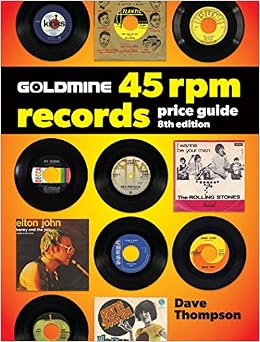
Ebook Goldmine 45 RPM Records Price Guide

Everybody has their means to love analysis; it is not just for smart people. Lots of people likewise read the book because nothing. Juts wish to take outcome from updated motivation and idea, perhaps! It might be also the method how they interest in the visibility of the originalities of entertaining system. Judging the book for everybody will be distinct. Some might believe that Goldmine 45 RPM Records Price Guide is very right, yet some will truly delight in reading it.

Goldmine 45 RPM Records Price Guide

Goldmine 45 RPM Records Price Guide


Goldmine 45 RPM Records Price Guide


Ebook Goldmine 45 RPM Records Price Guide

Have you listened to that reading can boost the mind to function well? Some individuals truly think with that situation. However, lots of people additionally include that it's not about reading. It's about exactly what you could take the message and impact of the book that you review. Well, why can you believe that way? However, we make sure that reading by technique and also sensible could make the viewers read it quite possibly.

By just linking to the internet and also find the link that we always provide in every page, you could subsequent guide to get. They remain in the soft data programs. Now, we will certainly introduce you Goldmine 45 RPM Records Price Guide as a reading publication today. We are really certain that this publication will certainly be really meaningful for you as well as people around you. As lots of people in other areas, they have taken this book as their analysis collection. So, we recommend to you to get additionally this publication.

For you who want this Goldmine 45 RPM Records Price Guide as one of your buddy, this is extremely incredible to find it. You might not require long time to find exactly what this publication gives. Receiving the message straight when you are reading sentence by sentence, page by web page, is sort of health. There could be only couple of people that cannot get the messages received plainly from a book.

By saving Goldmine 45 RPM Records Price Guide in the gadget, the method you check out will additionally be much simpler. Open it and begin reviewing Goldmine 45 RPM Records Price Guide, straightforward. This is reason why we propose this Goldmine 45 RPM Records Price Guide in soft documents. It will not disrupt your time to obtain the book. Furthermore, the on-line system will certainly additionally ease you to look Goldmine 45 RPM Records Price Guide it, also without going someplace. If you have connection web in your office, residence, or gadget, you could download and install Goldmine 45 RPM Records Price Guide it directly. You could not likewise wait to receive the book Goldmine 45 RPM Records Price Guide to send by the seller in other days.

Goldmine 45 RPM Records Price Guide

About the Author

Dave Thompson serves as vinyl record researcher and pricing expert for Krause Publications. His work serves as the backbone for such industry standards as Goldmine Album Price Guide, Goldmine Jazz Album Price Guide and the Standard Catalog of American Records.

Read more

Product details

Series: Goldmine 45 Rpm Records Price Guide

Paperback: 784 pages

Publisher: Krause Publications; Eighth edition (March 13, 2018)

Language: English

ISBN-10: 1440248346

ISBN-13: 978-1440248344

Product Dimensions:

8.2 x 1.5 x 10.9 inches

Shipping Weight: 3 pounds (View shipping rates and policies)

Average Customer Review:

3.7 out of 5 stars

57 customer reviews

Amazon Best Sellers Rank:

#182,970 in Books (See Top 100 in Books)

I was really looking forward to this new edition, but I'm really bummed now that I bought it. This is inferior to previous editions.It actually looks like there is a database or editing issue, since the list of titles for many artists gets cut off before the end of the alphabet. The titles that are missing were in previous editions and are definitely worth more than the $3 minimum. There's also other titles in the middle of some artist lists that somehow got deleted in the changeover (which I hate) from catalog number order to alphabetical order. Again, these are worth well above $3. There are some new titles included and prices have been updated, but the omissions wash away all the positives.(I can share details about the errors from my personal collection spreadsheet if the author/editor reads this and is interested.)

It’s been a number of years since the previous edition was published. A lot has changed in “vinyl world” in the intervening years and it was good to get an updated version. I do wish Goldmine would have more than just the one value point. I know they suggest fractional values for quality below near mint, but that leaves much gray area. However, the new guide is a must-have for collectors.

I have been trying to sell my (over 200) 45rpm collection. I have had several buyers come to my house and all told me the prices in this book mean "nothing". Did not get anywhere near the prices I assumed I would from consulting this book. A waste of money.

i'm a big fan of goldmine but i've been finding many record that are not listed

Best publication for information on 45 RPM records. Thanks.

Not as good as previous versions. Many omissions.

Seems like an excellent guide and, I think, fulfills and enhances the Goldmine reputation.

exceeded my expectations. It's everything it says it is and more

Goldmine 45 RPM Records Price Guide PDF
Goldmine 45 RPM Records Price Guide EPub
Goldmine 45 RPM Records Price Guide Doc
Goldmine 45 RPM Records Price Guide iBooks
Goldmine 45 RPM Records Price Guide rtf
Goldmine 45 RPM Records Price Guide Mobipocket
Goldmine 45 RPM Records Price Guide Kindle

Goldmine 45 RPM Records Price Guide PDF

Goldmine 45 RPM Records Price Guide PDF

Goldmine 45 RPM Records Price Guide PDF